
By Daniel Harper
Digital Safety Editor
Jun 4, 2026
How to Spot a Fake Text Message in 2026
Text messages have become one of the most common ways scammers try to reach people. A message may appear to come from a delivery company, your bank, a government agency, or even a family member. Some scam texts are so convincing that many people click before they have time to think.
The good news is that most fraudulent text messages follow familiar patterns. By learning a few warning signs and taking a moment to verify information, you can avoid becoming a victim of text message scams.
Why Scam Text Messages Are More Common Than Ever
Text messaging is fast, personal, and widely used. Nearly everyone checks their phone multiple times a day, which makes text messages an attractive tool for scammers.
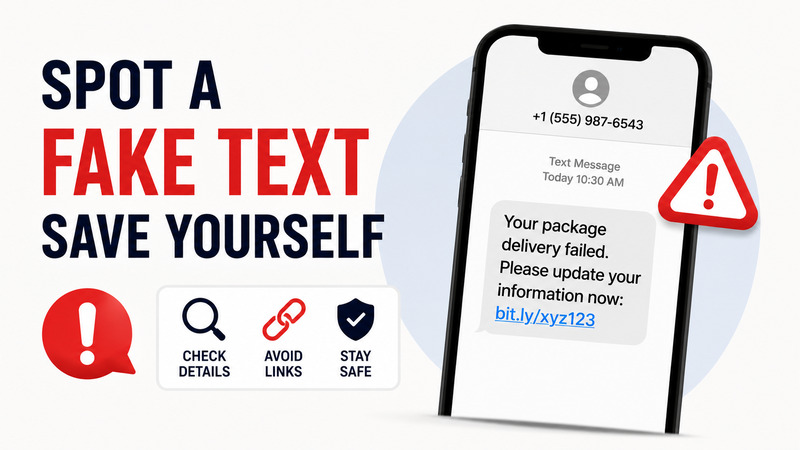
In recent years, scammers have become more sophisticated. They can send thousands of messages at once and use technology to make messages appear more believable. Some scam texts even use information gathered from social media or public records to sound convincing.
Older adults are often targeted because scammers assume they may be more trusting of messages that appear to come from banks, government agencies, healthcare providers, or family members. However, people of all ages receive scam texts every day.
The most effective defense is understanding how these scams work.
The 7 Warning Signs of a Fake Text Message
1. It Creates a Sense of Urgency
Scammers want you to act quickly before you have time to think.
You might see messages such as:
- Your account will be suspended today.
- Immediate action is required.
- Your package will be returned unless you respond now.
- Your payment is overdue.
These messages are designed to trigger fear or panic. Legitimate organizations rarely demand immediate action through a text message.
If a message pressures you to act within minutes or hours, take a step back and verify the information independently.
2. It Contains Suspicious Links
Many scam texts include links that lead to fake websites designed to steal passwords, payment information, or personal details.
A fraudulent link might look similar to a real website but contain extra letters, unusual spelling, or unfamiliar domain names.
For example:
- Official: companyname.com
- Suspicious: companyname-security.com
- Suspicious: companyname-alerts.net
Some scammers also use shortened links that hide the true destination.
Before clicking any link, ask yourself:
- Was I expecting this message?
- Does the website address look legitimate?
- Can I visit the company's official website directly instead?
When in doubt, open your browser and navigate to the official website yourself.
3. The Sender Looks Strange
Pay attention to who sent the message.
Legitimate businesses often use recognizable short codes, official business names, or customer service numbers.
Potential warning signs include:
- Long international phone numbers
- Random-looking numbers
- Email addresses sent through text messages
- Names that don't match the organization
A message claiming to be from your bank but sent from an unfamiliar number deserves extra scrutiny.
Remember that scammers can sometimes spoof phone numbers, making messages appear more trustworthy than they actually are.
4. It Requests Personal Information
One of the clearest warning signs is a request for sensitive information.
Scammers may ask for:
- Social Security numbers
- Medicare numbers
- Banking information
- Passwords
- Verification codes
- Credit card details
Legitimate organizations generally do not request confidential information through text messages.
If you receive such a request, do not respond. Instead, contact the organization directly using information from its official website.
5. The Message Contains Mistakes
Although scam messages have improved over the years, many still contain clues that something is wrong.
Look for:
- Spelling mistakes
- Awkward grammar
- Unusual capitalization
- Strange wording
- Poor formatting
For example, a message might claim to be from a major bank but contain obvious language errors that a professional organization would likely avoid.
Not every scam contains mistakes, but errors should increase your suspicion.
6. It Promises Something Too Good to Be True
Unexpected rewards are another common scam tactic.
Examples include:
- You've won a lottery you never entered.
- You're eligible for a large cash reward.
- You qualify for a special government payment.
- You've been selected for a free vacation.
Scammers know that excitement can cloud judgment.
Before believing any unexpected offer, ask yourself whether it makes sense. If you didn't enter a contest or request a benefit, be skeptical.
7. It Asks for Unusual Payment Methods
Scammers often prefer payment methods that are difficult to reverse.
Be cautious if someone asks for payment through:
- Gift cards
- Cryptocurrency
- Wire transfers
- Payment apps
- Prepaid debit cards
Legitimate businesses rarely demand payment using these methods.
If someone insists on a specific payment type and pressures you to act quickly, it's often a sign of fraud.
Real-Life Scam Text Examples
Fake Package Delivery Alert
Example:
"USPS: Your package delivery failed. Please confirm your address here: [link]"
Warning signs:
- Unexpected delivery problem
- Suspicious link
- Pressure to act quickly
Always check package status through the shipping company's official website or app.
Fake Bank Security Warning
Example:
"Your account has been locked due to suspicious activity. Verify immediately here: [link]"
Warning signs:
- Creates fear
- Requests account verification
- Directs you to an unfamiliar website
Instead of clicking, log into your account through your bank's official website or mobile app.
Fake Toll Road Payment Notice
Example:
"You have an unpaid toll balance. Failure to pay today may result in penalties."
Warning signs:
- Urgent payment request
- Unexpected charge
- Suspicious payment link
Several states have reported widespread toll road scams that target drivers with fake payment notices.
Fake Medicare or Social Security Message
Example:
"Your benefits are at risk. Confirm your information immediately."
Warning signs:
- Requests personal information
- Creates urgency
- Claims to represent a government agency
Government agencies generally communicate through official channels and rarely request sensitive information by text.
What To Do If You Receive a Suspicious Text
If a text message seems suspicious:
Step 1: Do Not Click Any Links
Avoid interacting with links, attachments, or buttons in the message.
Step 2: Do Not Reply
Even replying "STOP" may confirm that your phone number is active.
Step 3: Block the Sender
Most smartphones allow you to block numbers with a few taps.
Step 4: Report the Message
You can report suspicious texts to your wireless carrier or relevant authorities.
Step 5: Delete the Message
Once reported, delete the message to avoid accidentally interacting with it later.
What If You Already Clicked the Link?
Don't panic. Many people click suspicious links before realizing something is wrong.
Take these steps immediately:
Change Important Passwords
Update passwords for email, banking, and other sensitive accounts.
Enable Two-Factor Authentication
Adding an extra layer of security can help protect your accounts.
Contact Your Bank
If you entered financial information, notify your bank or credit card provider right away.
Monitor Your Accounts
Watch for unusual transactions, login attempts, or account changes.
Run a Security Scan
Use trusted antivirus or security software to scan your device if you downloaded anything.
The sooner you act, the better your chances of preventing serious problems.
Quick Scam Text Safety Checklist
Before responding to any unexpected text message, ask yourself:
- Was I expecting this message?
- Is the sender legitimate?
- Does the message create urgency?
- Does it ask for personal information?
- Does the link look suspicious?
- Can I verify this through the official website?
- Should I ask a trusted family member for a second opinion?
If you answer "yes" to any warning sign, proceed carefully.
Final Thoughts
Scam text messages continue to evolve, but their goal remains the same: convincing you to act before you have time to think.
Whether a message claims to be from a delivery company, a bank, a government agency, or even a loved one, taking a few extra moments to verify the information can protect your money, your identity, and your peace of mind.
When in doubt, don't click. Visit the organization's official website, call a trusted phone number, or ask someone you trust for advice. A little caution can go a long way toward staying safe online.
Related Blogs

How to Choose the Best Health Insurance Plan in 2026: A Complete Buyer's Guide
Jun 30, 2026

HMO vs PPO vs EPO: Which Health Insurance Network Is Right for You?
Jun 28, 2026
Understanding Health Insurance Deductibles, Copays, and Out-of-Pocket Maximums
Jun 26, 2026

Best Health Insurance Plans for Self-Employed Professionals in 2026
Jun 24, 2026

What Data Do Companies Collect
Jun 23, 2026

Family Health Insurance: How to Cover Everyone Without Breaking the Bank
Jun 22, 2026

How Auto Insurance Premiums Are Calculated: Factors That Affect Your Rate in 2026
Jun 20, 2026

How to Download Apps Safely from Stores: A Complete Security Guide
Jun 19, 2026

Comprehensive vs Collision Auto Insurance: What's the Difference?
Jun 18, 2026
How to Spot Fake Websites: A Complete Guide to Protecting Yourself Online
Jun 16, 2026